
Martyn’s Law Update: The SIA’s New Scope Tool and Notification Portal Explained


The Security Industry Authority (SIA) published a Martyn’s Law update on 11 September 2026.
The update confirms that new support tools are being developed for venues, premises and events.
These include:
- An online scope-check tool.
- Draft templates for Standard and Enhanced tier premises.
- An online notification portal hosted on GOV.UK.
- Further guidance and testing with volunteers from regulated sectors.
The Terrorism (Protection of Premises) Act 2025 is expected to come into force in spring 2027.
Businesses cannot notify the SIA yet.
The immediate priority is to understand whether your premises or event is in scope, review your existing procedures and prepare your staff.
If you manage a venue, event space, place of worship, retail site, hospitality business or public-facing building, start preparing now.
WHAT IS MARTYN’S LAW?
Martyn’s Law is the common name for the Terrorism (Protection of Premises) Act 2025.
The law is designed to improve preparedness and public protection at qualifying premises and events.
It focuses on practical steps that reduce the risk of physical harm if a terrorist attack occurs at, or near, a venue.
This can include:
- Clear emergency procedures.
- Staff awareness.
- Communication arrangements.
- Evacuation, invacuation or lockdown procedures.
- Coordination with emergency services.
- Measures that reduce the vulnerability of a venue.
- Regular training and exercises.
Martyn’s Law does not mean that every business must install expensive equipment or purchase a ‘compliance package’.
As Zems Academy’s previous Martyn’s Law guidance explains, there is no official third-party product certification that automatically makes a venue compliant.
Compliance starts with understanding your responsibilities and putting suitable procedures in place.
THE TWO MARTYN’S LAW TIERS
The requirements depend on the size and nature of the premises or event.
STANDARD TIER: 200–799 CAPACITY
Standard tier premises generally have a capacity of between 200 and 799 people.
This includes staff, visitors, customers and members of the public who may be present at the same time.
The Standard tier focuses on having appropriate public protection procedures.
Managers should consider:
- How staff receive and share information.
- What staff should do during a suspected attack.
- How people may be moved to safety.
- How emergency plans are communicated.
- Who is responsible for making decisions.
- How procedures are reviewed and improved.
The SIA’s draft Standard tier template is intended to help premises managers think through and document their current arrangements.
The template is optional.
Businesses do not have to use the SIA template, but it may provide a useful structure for reviewing existing procedures.
ENHANCED TIER: 800+ CAPACITY
Enhanced tier premises and qualifying events generally have a capacity of 800 or more people.
Enhanced tier responsibilities require more detailed preparation.
This can include:
- Documented public protection measures.
- More detailed risk reduction arrangements.
- Clear roles and responsibilities.
- Stronger links between venue management, security teams and emergency services.
- Evidence that procedures are reviewed and maintained.
- Further information submitted through the notification process once the law is in force.
Large venues and events should begin identifying their responsible person and internal lead now.
Do not wait until the notification portal opens to decide who owns the process.
THE NEW SIA SCOPE-CHECK TOOL
The SIA is developing an online tool to help premises and event managers work out whether they are likely to be in scope.
The tool is expected to be available in the new year.
It will provide a structured way to consider questions about:
- The type of premises.
- The main use of the building.
- Whether the venue is accessible to the public.
- Expected capacity.
- Entry checks and ticketing.
- Whether an event meets the relevant criteria.
- Whether the site falls within an exclusion.
The tool will support the official guidance.
It will not replace the Home Office’s statutory Section 27 guidance.
Until the tool becomes available, use the ProtectUK Martyn’s Law resources and the Home Office Section 27 guidance.
These resources include flowcharts, case studies, factsheets and scope information.
ARE YOU IN SCOPE? CHECKLIST
Use this checklist as an initial review.
It is not a legal determination. Always check the official guidance for your circumstances.
- Is your site a building or part of a building?
- Is it used wholly or mainly for a relevant Schedule 1 purpose?
- Is it open or accessible to members of the public?
- Could 200 or more people be present at the same time?
- Do you operate a venue such as a shop, restaurant, place of worship, entertainment site or event space?
- Do you run public events with entry checks, such as tickets, passes or membership checks?
- Could 800 or more people be present at an event?
- Is the building used for more than one purpose?
- Have you identified the principal use of the premises?
- Have you checked whether any exclusion applies?
- Have you identified the responsible person?
- Have you documented your current security and emergency procedures?
If you answer ‘yes’ to several questions, review the official guidance and begin preparing your documentation.
WHAT THE NOTIFICATION PORTAL WILL DO
The SIA is building a secure online notification portal hosted on GOV.UK.
The portal is expected to be operational when the Terrorism (Protection of Premises) Act 2025 comes into force in spring 2027.
It is expected to provide a familiar government service experience, similar to other GOV.UK online systems.
The portal will allow qualifying premises and events to submit the required notification to the SIA.
It is also expected to support the submission of relevant compliance information and documented procedures where required.
Businesses cannot notify the SIA yet.
There is no need to submit information through unofficial websites or pay a third party to notify on your behalf.
The SIA is currently looking for volunteers to test the portal’s design and functionality.
Testing will help the SIA identify problems before the system becomes operational.
The SIA is also testing its draft templates with protective security partners and volunteers from regulated sectors.
WHAT VENUES SHOULD DO IN THE NEXT 90 DAYS
Preparation should be practical and organised.
Use the following three-stage plan.

DAYS 1–30: CHECK YOUR SCOPE
Start with the official resources.
Use the ProtectUK flowcharts and Section 27 guidance to review your premises or event.
Confirm:
- Your expected capacity.
- The main use of the premises.
- Whether the public can access the site.
- Whether entry checks apply.
- Whether the venue is likely to be Standard or Enhanced tier.
- Who controls the premises and who should act as the responsible person.
Record the reasons for your decision.
Keep a copy of relevant guidance and note any questions that require further clarification.
DAYS 31–60: REVIEW YOUR PROCEDURES
Review what is already in place.
Do not start by buying products.
Start by checking your current arrangements.
Review:
- Emergency response plans.
- Evacuation and invacuation procedures.
- Lockdown arrangements.
- Staff communication systems.
- Radio and telephone procedures.
- Incident reporting.
- CCTV monitoring.
- Door supervision and access control.
- Visitor management.
- Escalation routes.
- Arrangements for customers or visitors who need additional support.
Look for gaps.
Make responsibilities clear.
A procedure is only useful if staff understand it and can follow it under pressure.
DAYS 61–90: TRAIN STAFF AND TEST DRILLS
Training turns written procedures into practical action.
Relevant staff should understand:
- What suspicious activity may look like.
- How to report concerns.
- Who should receive information.
- How to communicate during an incident.
- When to evacuate, invacuate or lock down.
- How to support members of the public.
- How to work with licensed security staff.
- How to record and review an incident.
Run short, realistic exercises.
Test one procedure at a time.
For example:
- Can staff raise an alert quickly?
- Do managers know who makes the decision?
- Can security teams communicate with venue staff?
- Do staff know where people should move?
- Are exits and access routes understood?
- Can the venue support people who require assistance?
- Is there a clear process for contacting emergency services?
After every exercise, record what worked and what needs to change.
WHERE SECURITY TRAINING FITS
Martyn’s Law readiness depends on people as well as paperwork.
Security officers, door supervisors, CCTV operators, stewards, managers and front-of-house teams all have different responsibilities.
Good training helps staff understand their role before an incident occurs.
Zems Academy provides practical security training in Birmingham, including:
- Door Supervisor training.
- Security Officer training.
- CCTV Operator training.
- Security refresher training.
- Emergency First Aid training.
- Practical scenario-based learning.
- Employability programmes for people entering the security sector.
Training can support staff awareness, communication, reporting, access control and emergency response.
It can also help employers build a trained workforce with the right qualifications and confidence.
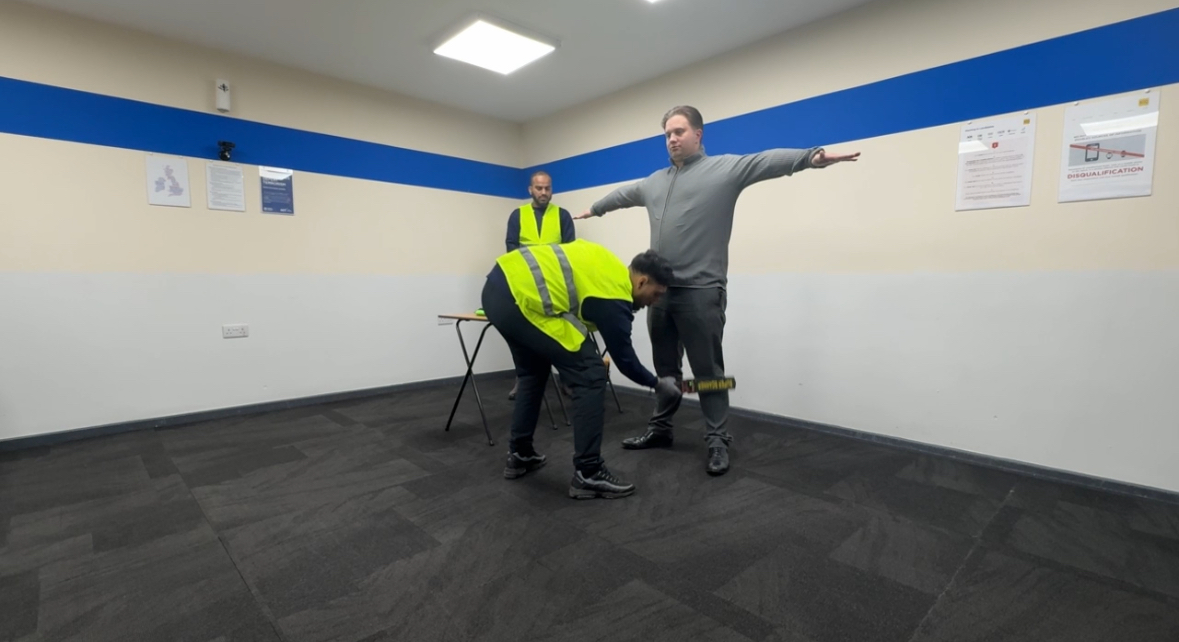
Martyn’s Law training should be linked to your venue’s own procedures.
Generic training is useful, but staff also need to understand how the guidance applies to their workplace.
Use your own floor plan, entrances, exits, communication systems and reporting arrangements during exercises where possible.
USE OFFICIAL GUIDANCE AND PLAN AHEAD
The SIA’s 11 September update provides a clear message: more tools are coming, but preparation starts now.
The scope-check tool is not available yet.
The notification portal is not open yet.
Businesses should not submit notifications through unofficial channels.
For now:
- Check whether your premises or event is likely to be in scope.
- Confirm whether the Standard or Enhanced tier applies.
- Identify the responsible person.
- Review existing security and emergency procedures.
- Document gaps and required improvements.
- Train relevant staff.
- Run practical drills.
- Monitor GOV.UK, the SIA and ProtectUK for updates.
For official questions about the SIA’s Martyn’s Law preparations, contact the SIA at MLR@sia.gov.uk.
BOOK SECURITY AND MARTYN’S LAW READINESS TRAINING
Do not wait for the portal to open before preparing your team.
Book security training now.
Zems Academy supports employers, security teams and learners with practical training designed around workplace requirements.
Whether you need licensed security staff, refresher training, CCTV training or staff awareness support, Zems Academy can help you build a clear preparation plan.
Explore Zems Academy training courses.
Contact Zems Academy to discuss security training, employability programmes and Martyn’s Law readiness training in Birmingham and beyond.