The Jobcentre Is Changing on 1 October: What the Careers Service Merger Means for Your Job Search


From 1 October 2026, Jobcentre Plus and the National Careers Service in England are joining together as the new Jobs and Careers Service.
The change brings careers advice, job search support, skills planning and training referrals closer together.
This matters if you are:
- Unemployed and looking for work
- Aged 18–24 and not in education, employment or training
- Changing career
- Referred through Restart, Trailblazer, the Jobs Guarantee or another Jobcentre Plus programme
- Looking for accredited training in Birmingham or the wider West Midlands
The change was confirmed by the Department for Work and Pensions (DWP) in its September update and in the House of Lords on 10 September 2026.
WHAT CHANGES FOR YOU?
The biggest change is simple: more employment and careers support is being brought into one service.
You can now expect a clearer route between:
- Understanding your skills
- Choosing a realistic job or career direction
- Improving your CV
- Finding suitable vacancies
- Identifying skills gaps
- Asking for training or employability support
- Moving into work
The face-to-face careers advice previously delivered through the National Careers Service is moving into the DWP Careers Service.
Adults aged 18 or over can access support from a careers adviser. Some under-18s may also be eligible, including young people who are not in education, employment or training.
Young people still in school or college should continue to use their school, college or training provider for careers guidance.
The National Careers Service website remains available, but its name is changing to Get careers information and advice. You can still use it to explore careers, discover your skills and find courses.
WHAT IS NOW IN ONE PLACE?
The new Jobs and Careers Service is designed to connect support that was previously more separate.
This includes:
- Job search and vacancy applications
- Careers information and advice
- Skills assessments
- Training and course information
- CV support
- Interview preparation
- Work coach appointments
- Careers adviser appointments
- Referrals to local employability programmes
- Employer and recruitment support
The service will be digital where possible and human where needed.
That means you can use online tools independently, but you can also ask for a face-to-face appointment when you need more detailed support.

USE THE WORK HUB TO START NOW
The new Jobs and Careers Service includes the Work Hub.
The Work Hub is free and can be used on a phone, tablet or computer. You do not need to be claiming benefits to use the digital tools.
The main tools include:
AI Work Assistant
The AI Work Assistant can help you:
- Explore possible career directions
- Identify transferable skills
- Improve your job search
- Prepare for applications
- Practise interview questions
- Think about training and progression
Use it to generate ideas and prepare questions for your adviser.
Do not rely on it to make every decision for you. Check important information, especially course entry requirements, licences, right-to-work requirements and funding rules.
CV builder
The Work Hub CV builder helps you turn your experience, qualifications and skills into a CV for the roles you want.
DWP reported that around 20,000 people had used the CV builder since its June 2026 launch.
Use the tool to create a clear starting CV. Then check it carefully.
Add specific evidence such as:
- The type of work you have done
- The equipment or systems you have used
- Your qualifications
- Your availability
- Customer service or teamwork experience
- Health and safety responsibilities
- Any volunteering, placements or work experience
The CV builder is an additional service. It does not replace your work coach, careers adviser or training provider.
DWP also reported that around 16,000 people had used the AI Work Assistant by late September 2026.
You can also use the Find a job service to search and apply for vacancies.
WHAT WILL HAPPEN FACE TO FACE?
A work coach can help you plan practical steps towards employment.
A careers adviser can help you make better decisions about your longer-term direction.
You may discuss:
- Your previous work and life experience
- The jobs available in your area
- Your strengths and transferable skills
- Qualifications needed for a target role
- Barriers affecting your job search
- Training options
- Applications and interview preparation
- A realistic action plan
You do not need to arrive with a perfect career plan.
Arrive with a clear problem or question instead.
For example:
“I want to work in security, but I need to understand which SIA course and licence I should work towards.”
Or:
“I am applying for warehouse jobs, but I need forklift training and a better CV. What support is available?”
HOW TO ASK FOR FUNDING FOR TRAINING
Training funding is not automatic. Eligibility depends on your circumstances, the programme you are using, local rules, the course and the employment outcome.
However, you can ask your work coach or adviser to assess your options.
Use this process:
-
Choose a target job.
Find two or three real vacancies in Birmingham or the West Midlands. -
Read the requirements.
Identify the qualification, licence, card or skill requested by employers. -
Compare your current skills.
Write down what you already have and what is missing. -
Choose an accredited or recognised course.
Check the course title, awarding body, entry requirements and expected outcome. -
Ask for a referral and funding assessment.
Ask your work coach to record the request and explain the next step.
Take evidence to your appointment:
- A current CV
- Screenshots or printouts of job adverts
- Your National Insurance or claimant details, where relevant
- Existing certificates
- Right-to-work documents, if requested
- A list of barriers such as travel, childcare, digital access or confidence
- Course details from the training provider
- Dates and costs
- Information about the job outcome
Do not simply say, “I want a course.”
Say:
“These three employers ask for this qualification. I have the required experience but not the certificate. Can you assess whether I can be referred or supported with funding?”
TRAINING ROUTES TO ASK ABOUT
Your training request should match a real job goal.
Functional Skills English and Maths
Ask about Functional Skills if you need to improve your English or Maths for work, an apprenticeship, further training or a licence.
You may need support with:
- Reading workplace instructions
- Writing emails or records
- Completing forms
- Basic calculations
- Measurements
- Timesheets
- Health and safety information
Explain how the skill affects your target job.
Security training
If you want to work in security, ask about the correct SIA pathway.
Options may include:
- Door Supervisor
- CCTV Operator
- Spectator Safety
- Security-related refresher or top-up training
Check the current SIA requirements before enrolling.
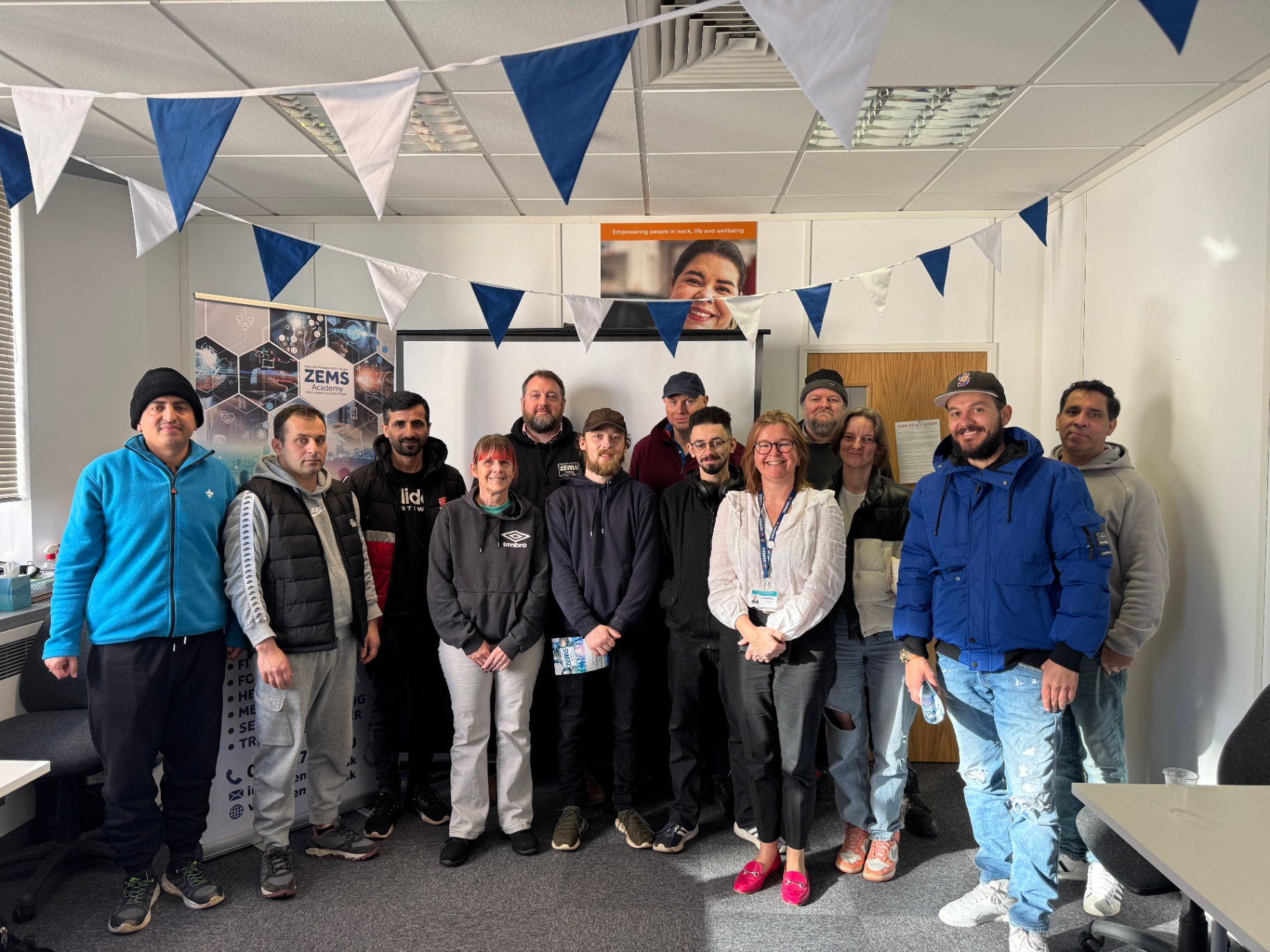
Zems Academy’s Level 2 Door Supervisor course provides one example of a Birmingham security training route.
Ask your adviser to confirm:
- Which licence your target job requires
- Whether you meet the entry requirements
- Whether the course is approved or recognised
- Whether first aid training is included
- What costs may be covered
- What evidence of job demand is required
Construction and CSCS
For entry-level construction work, ask about:
- Health and Safety in Construction
- CSCS preparation
- The Green Labourer Card route
- Traffic Marshal or Banksman training
- Site readiness and emergency first aid
Employers may require a CSCS card or other site-specific evidence.
Bring a construction job advert showing the requirement. Zems Academy delivers construction and CSCS-related training in Birmingham. View the Zems Academy training offer.
Hospitality and food safety
For hospitality, catering and food service roles, ask about:
- Food Safety
- Allergen awareness
- Customer service
- Cleaning and support work
- Emergency first aid
Food safety training can support applications for jobs in restaurants, cafés, hotels, catering and food production.
Warehousing and forklift training
If your target is warehousing, distribution or logistics, ask about:
- Warehouse operative training
- Manual handling
- Health and safety
- Forklift or plant training
- Picking, packing and stock control
- Shift work and transport requirements
Ask which type of forklift certificate or training employers in your target area actually request.
Availability can change, so confirm current course dates, costs and funding routes with your work coach and the training provider.
QUICK-CHECK GRID: WHAT TO ASK YOUR WORK COACH FOR
| Your situation | Ask for | Bring this evidence |
|---|---|---|
| You do not know which career to choose | A careers adviser appointment and skills discussion | Work history, interests and three possible job areas |
| You apply but receive no responses | CV review, CV builder support and application guidance | Current CV and two recent applications |
| You need core qualifications | Functional Skills English and Maths assessment | Previous certificates and examples of skills gaps |
| You want security work | Advice on Door Supervisor, CCTV or Spectator Safety training | Security job adverts and any existing SIA information |
| You want construction work | CSCS and site-readiness training options | Construction vacancies and current certificates |
| You want hospitality work | Food safety and customer service training | Hospitality vacancies and availability |
| You want warehouse work | Warehouse, logistics and forklift options | Warehouse vacancies, travel details and shift availability |
| You need help paying for training | A funding and eligibility assessment | Course details, cost, dates and job outcome |
YOUR 5-STEP JOB-READY CHECKLIST
Complete these five steps before your next appointment.
1. Pick one target job
Choose a specific role, such as Door Supervisor, CCTV Operator, Labourer, Traffic Marshal, Kitchen Assistant or Warehouse Operative.
2. Find three real vacancies
Use Find a job and other trusted vacancy websites.
Record:
- Job title
- Employer
- Location
- Pay
- Hours
- Required qualifications
3. Identify your skills gap
Write down the one or two things stopping you from applying confidently.
This could be a qualification, licence, CV, transport issue or Functional Skills requirement.
4. Use the digital tools
Try the AI Work Assistant and CV builder.
Save your work and check every detail.
5. Ask for a recorded next step
At your appointment, ask:
“What is the next action, who is responsible for it and when will it happen?”
This could be a careers adviser referral, training assessment, course application, employer introduction or interview preparation session.
TAKE ACTION THIS WEEK
The Jobs and Careers Service gives you more ways to move from job search to job-ready training.
Use the digital tools.
Book the adviser appointment.
Bring evidence.
Ask directly about accredited training and funding.
If you are in Birmingham or the West Midlands, contact Zems Academy to discuss suitable vocational training, including Functional Skills, security, construction, hospitality and logistics pathways.
Your next step should lead to a clear outcome: a qualification, an interview, a work placement or a job.
Start your plan now.