
Warehouse Peak Season 2026: Why Forklift Drivers Are Being Hired Now for Christmas

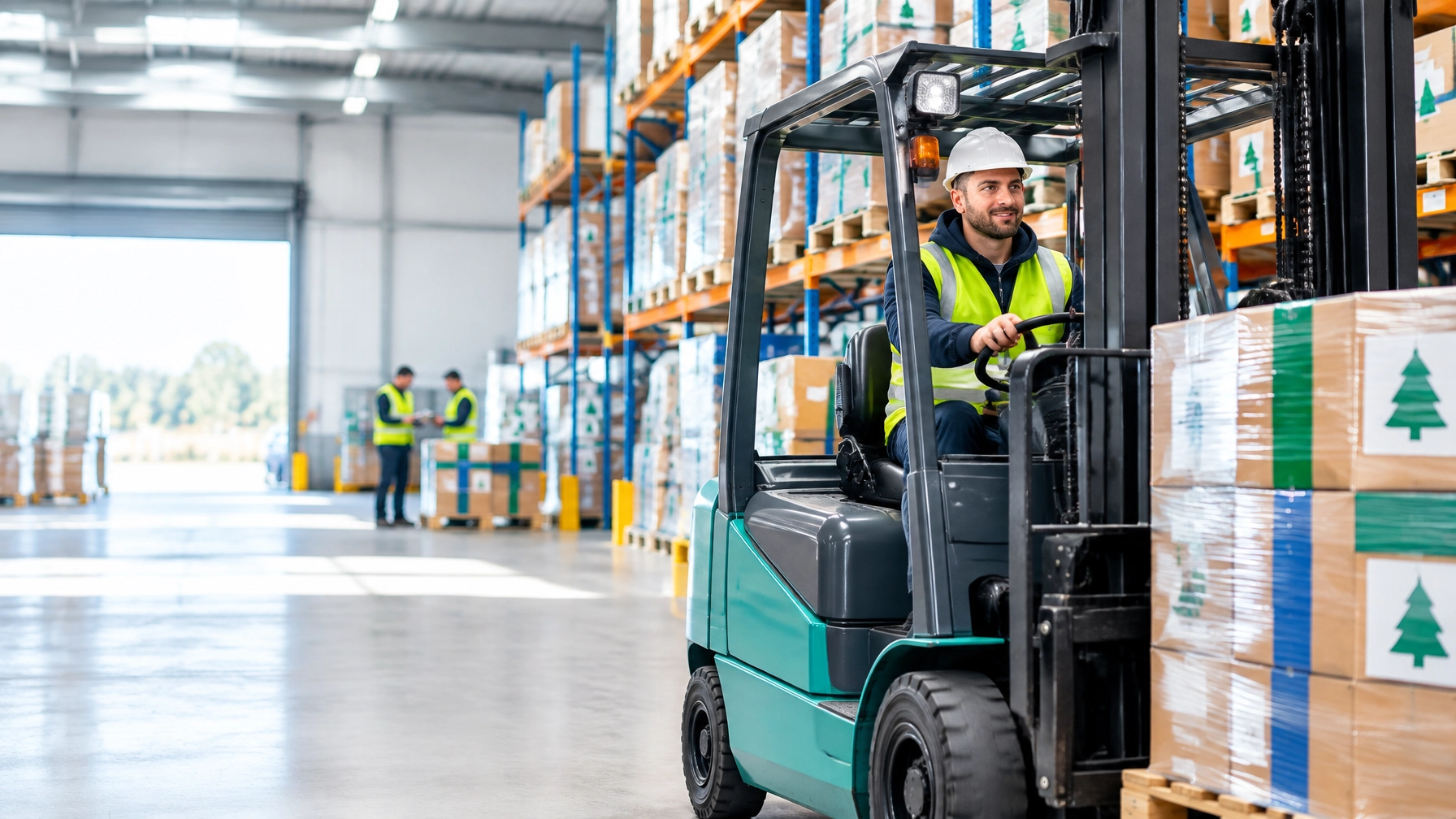
Christmas recruitment is already moving across UK logistics and warehousing.
Retailers and distribution centres need extra staff for Black Friday, Christmas deliveries, returns and the January sales. The busiest period is known as the golden quarter.
Forklift drivers are among the first warehouse workers to be secured. Employers also need pickers, packers, warehouse supervisors and experienced warehouse operatives.
If you wait until October to start your job search or training, many of the strongest opportunities may already be filled.
Book forklift and warehousing training now. Get job-ready before peak demand increases.
WHY CHRISTMAS WAREHOUSE RECRUITMENT STARTS EARLY
Warehouse employers cannot always recruit and place a trained forklift operator immediately.
Recruitment may involve:
- Application and interview
- Right-to-work checks
- Forklift training or verification of existing training
- Site induction
- Health and safety training
- Supervised familiarisation
- Written authorisation to operate equipment
This takes time.
Industry reports from August and September 2026 indicate that forklift roles remain difficult to fill, particularly in major logistics areas such as the Midlands. Experienced operators are usually recruited first because they can contribute quickly with less supervision.
Large retailers are also competing for the same candidates.
The John Lewis Partnership has announced more than 10,400 seasonal roles for Christmas 2026, including around 1,800 positions linked to distribution centres and the supply chain. Its Christmas recruitment information confirms that seasonal vacancies are generally advertised from late September through November.
This creates a clear message for job seekers:
Do not wait for the busiest month. Prepare before the vacancies appear.
CHRISTMAS PEAK SEASON COUNTDOWN

AUGUST: START YOUR PREPARATION
Use August to identify the role you want.
Check whether you need:
- Counterbalance forklift training
- Reach forklift training
- Refresher training
- Warehouse health and safety awareness
- Manual handling training
- A new CV focused on logistics and warehousing
This is also the right time to contact training providers and recruitment agencies.
SEPTEMBER: COMPLETE TRAINING AND APPLY
September is a key recruitment month.
Complete your training and begin applying for:
- Forklift operator roles
- Warehouse operative roles
- Picker and packer roles
- Supply chain assistant roles
- Distribution centre vacancies
- Warehouse supervisor positions
Register for job alerts with major retailers, logistics companies and recruitment agencies.
OCTOBER: EXPECT HIGHER COMPETITION
By October, many employers are finalising their Christmas workforce.
There are still opportunities, but competition increases. Last-minute recruitment can also mean:
- Fewer available shifts
- Higher competition for forklift roles
- More agency work
- Less choice over location
- Less time to complete training
- Greater pressure to start quickly
NOVEMBER AND DECEMBER: WORK THE PEAK
Peak shifts often begin before Christmas and continue through the January sales.
You may work in:
- Goods-in
- Storage and replenishment
- Order picking
- Dispatch
- Loading and unloading
- Returns processing
- Stock movement
Good seasonal performance can lead to longer-term work.
ROLES IN DEMAND

1. FORKLIFT OPERATORS
Forklift operators move pallets, load vehicles, replenish stock and support safe warehouse flow.
The most requested categories are usually:
- Counterbalance forklift
- Reach forklift
Counterbalance trucks are commonly used for loading, unloading and moving pallets across open warehouse areas.
Reach trucks are designed for working in narrower aisles and placing loads into higher racking.
Training on one forklift category does not automatically authorise you to operate another. You need the correct type-specific training and employer authorisation.
Forklift operators are often among the first seasonal workers hired because safe equipment operation requires competence, assessment and site familiarisation.
2. PICKERS AND PACKERS
Pickers and packers prepare customer and store orders.
Typical duties include:
- Locating stock
- Scanning products
- Checking quantities
- Packing items securely
- Preparing orders for dispatch
- Meeting accuracy and productivity targets
You do not always need previous warehouse experience for entry-level roles. However, employers value reliability, physical fitness, attention to detail and the ability to work at pace.
3. WAREHOUSE SUPERVISORS
Warehouse supervisors coordinate teams and help maintain safe, efficient operations.
Employers may look for experience in:
- Team leadership
- Stock control
- Goods-in and dispatch
- Health and safety
- Shift planning
- Warehouse management systems
- Performance monitoring
Previous experience as a warehouse operative or forklift driver can support progression into supervision.
WHAT QUALIFICATIONS DO EMPLOYERS LOOK FOR?
Forklift employers want evidence that you can operate equipment safely and understand workplace risks.
Useful training includes:
COUNTERBALANCE FORKLIFT TRAINING
This prepares learners to operate counterbalance trucks in appropriate work environments.
Training normally covers:
- Forklift controls
- Stability and load handling
- Pre-use checks
- Safe manoeuvring
- Pallet handling
- Loading and unloading
- Parking and shutdown procedures
REACH FORKLIFT TRAINING
Reach truck training focuses on precise operation in racking and narrow-aisle environments.
Training may cover:
- Safe use of the reach mechanism
- Racking and pallet placement
- Visibility and restricted-aisle operation
- Load stability
- Pedestrian awareness
- Safe parking
HEALTH AND SAFETY AWARENESS
Employers expect warehouse workers to understand basic workplace safety.
Relevant areas include:
- Pedestrian and vehicle segregation
- Manual handling
- Personal protective equipment
- Reporting hazards
- Safe loading and unloading
- Emergency procedures
- Risk assessment
- Accident and near-miss reporting
The Health and Safety Executive forklift guidance explains that lift truck operators need adequate training, testing and supervision.
HSE guidance also recognises the importance of basic training, specific job training and familiarisation before an operator works unsupervised.
A training certificate is useful evidence of competence. However, the employer must still assess the workplace, provide site-specific familiarisation and issue written authorisation.
PAY AND SHIFT PATTERNS DURING PEAK
Christmas warehouse pay varies by employer, location, experience and contract type.
Based on 2026 recruitment and salary information, standard forklift roles are commonly advertised around £14 to £17 per hour in many UK logistics areas. Peak-season rates may increase by approximately 10% to 25%, particularly where employers need experienced operators quickly.
Night shifts, weekends and overtime may attract additional payments.
Indicative peak patterns include:
- Early shift: 6am to 2pm
- Late shift: 2pm to 10pm
- Night shift: 10pm to 6am
- Twelve-hour day shifts
- Twelve-hour night shifts
- Four days on, four days off
- Weekend or overtime shifts
Always check the job advertisement for the confirmed rate, hours, overtime arrangements and contract length.
Do not choose a role based on hourly pay alone. Check:
- Travel time
- Shift rotation
- Break arrangements
- Contract end date
- Overtime terms
- Training requirements
- Possibility of permanent employment
HOW TO GET JOB-READY QUICKLY

Follow this simple plan.
1. CHOOSE YOUR TARGET ROLE
Decide whether you want to work as a forklift operator, warehouse operative, picker, packer or supervisor.
If your target is forklift work, identify whether employers near you request counterbalance, reach or both.
2. BOOK THE RIGHT TRAINING
Do not assume that a general warehouse course allows you to operate a forklift.
Book training that matches the equipment and role you want.
3. UPDATE YOUR CV
Place relevant training near the top of your CV.
Include:
- Forklift category
- Training completion date
- Warehouse experience
- Shift availability
- Manual handling experience
- Health and safety training
- Stock, picking or dispatch experience
4. APPLY EARLY
Search retailer and logistics careers pages from September.
For example, visit the John Lewis Partnership Christmas jobs page and search for warehouse, supply chain and distribution centre vacancies.
Apply as soon as suitable roles appear.
5. PREPARE FOR THE INTERVIEW
Employers may ask about:
- Safe forklift operation
- Pre-use checks
- Working around pedestrians
- Load stability
- Manual handling
- Shift flexibility
- Attendance and reliability
- Working under pressure
Give clear, practical answers.
TRAIN WITH ZEMS ACADEMY
Zems Academy provides vocational training and employability programmes designed to help learners move into sustainable employment.
The Academy supports learners with:
- Industry-relevant training
- Practical learning
- Recognised qualifications
- Employability support
- CV development
- Interview preparation
- Progression advice
- Employer-focused pathways
Zems Academy is based in Birmingham and supports learners across the UK through its nationwide training provision.
Warehousing and logistics are not the only routes available. Learners can also explore construction, security, hospitality training, Functional Skills and other employer-led pathways.
If you are ready to work in warehousing this Christmas, do not wait for November.
Book forklift and warehousing training with Zems Academy.
Choose your forklift category. Build your skills. Update your CV. Apply early. Get job-ready for the Christmas peak.
FINAL CHECKLIST
Before applying for Christmas warehouse work, make sure you have:
- Chosen a target warehouse role
- Checked whether counterbalance or reach training is required
- Completed relevant forklift training
- Reviewed health and safety requirements
- Updated your CV
- Confirmed your shift availability
- Registered for job alerts
- Applied for suitable vacancies
- Prepared for interview questions
- Contacted Zems Academy about training options
The strongest warehouse candidates are preparing now.
Book your training and start your Christmas logistics career with Zems Academy.