FSA Food Regulation Reform 2026: What Hospitality Kitchens Must Do to Stay Ahead on Allergens


The Food Standards Agency (FSA) has published its Future of Food Regulation report for the September 2026 Board meeting.
The report, dated 3 September 2026, sets out proposals to modernise how food businesses are registered, inspected, supported and monitored across England, Wales and Northern Ireland.
The reforms do not introduce a new list of allergens or a new mandatory allergen training qualification.
However, they point towards a more consistent, data-led and transparent regulatory system.
For hospitality businesses, this means accurate allergen information, effective staff training and strong kitchen controls will remain essential.
Now is the right time to review your systems.
WHAT IS THE FUTURE OF FOOD REGULATION PROGRAMME?
The FSA wants to create:
“An effective, resilient and trusted regulatory system that is fit for the future to ensure that food is safe and what it says it is.”
The proposed reforms focus on how food regulation is delivered.
They are not immediate changes to every kitchen rule.
They are part of a longer programme that will move through detailed design, stakeholder engagement and future consultation.
The FSA plans to develop proposals between September 2026 and March 2027, with a formal consultation currently planned for 2027.
The main areas of change include:
- Enhanced registration for food businesses.
- Better use of data and intelligence.
- More consistent regulatory pathways.
- Improved guidance for local authorities and businesses.
- A revised enforcement framework.
- Greater transparency around food hygiene.
- National oversight for some large food businesses.
- Continued local authority regulation for most hospitality businesses.
For most restaurants, cafés, takeaways, hotels and catering businesses, local authorities will remain the main regulatory body.
However, inspections and regulatory decisions may become more structured and evidence-led.
That makes good records, trained staff and reliable allergen systems increasingly important.
Read the FSA Future of Food Regulation report
WHAT COULD THE REFORM MEAN FOR HOSPITALITY BUSINESSES?
1. MORE CONSISTENT REGULATION
The FSA is considering a more connected national and local system.
This could lead to greater consistency in how food businesses are registered, assessed and supported.
Hospitality businesses may see clearer guidance on:
- Food safety management.
- Allergen controls.
- Staff competence.
- Record keeping.
- Cleaning and preparation procedures.
- Regulatory inspections.
- Food Hygiene Rating Scheme requirements.
The aim is to make it easier for businesses to understand what good compliance looks like.
Do not wait for new guidance before improving your current systems.
2. GREATER USE OF BUSINESS DATA
The programme includes stronger data and intelligence sharing.
In practice, regulators may use more information to identify risks, target resources and understand business performance.
Your business should be able to show:
- Who has completed food safety training.
- Who has completed allergen training.
- When training was completed.
- Which recipes and ingredients contain allergens.
- How supplier changes are checked.
- How allergen queries are managed.
- How incidents and complaints are recorded.
- How cleaning and cross-contact controls are monitored.
A verbal assurance is not enough if your records do not support it.
3. CLEARER ENFORCEMENT
The FSA is considering an updated enforcement framework with clearer intervention levels.
This could support more proportionate and joined-up action when risks are identified.
For hospitality kitchens, allergen failures can create serious risks because incorrect information may expose a customer to an ingredient that could cause a severe reaction.
Businesses must not rely on memory.
Staff must know where to find accurate information and when to ask a manager for support.
4. MORE TRANSPARENCY
The FSA report includes proposals for greater transparency around food hygiene.
This includes mandatory online Food Hygiene Rating display across the UK and mandatory in-store display in England.
A strong food hygiene rating supports customer confidence.
It also demonstrates that the business takes food safety seriously.
Allergen management should form part of that wider approach.
ALLERGEN RULES ALREADY APPLY
The proposed regulatory reforms do not replace existing allergen duties.
Food businesses must provide accurate information when any of the 14 regulated allergens are used as ingredients.
This applies to:
- Prepacked food.
- Prepacked for direct sale food.
- Loose food.
- Restaurant meals.
- Takeaway food.
- Catering.
- Bakery and counter-service products.
- Drinks and desserts.
For prepacked and prepacked-for-direct-sale food, allergenic ingredients must be identified and emphasised in the ingredients list.
For loose food, businesses must provide accurate allergen information to customers.
This information may be provided in writing or by trained staff, depending on the business’s system.
Where staff provide information verbally, the business must have a clear process to ensure the answer is accurate.
Staff should never guess.
They should check the recipe, allergen matrix, product label or approved information system.
The FSA also strongly recommends including allergen training in staff induction and refreshing it regularly.
THE 14 ALLERGENS: QUICK LIST
The 14 allergens that must be declared when used as ingredients are:
- Celery, including celeriac.
- Cereals containing gluten, including wheat, rye, barley and oats.
- Crustaceans, such as prawns, crab and lobster.
- Eggs.
- Fish.
- Lupin.
- Milk, including lactose.
- Molluscs, such as mussels, oysters and squid.
- Mustard.
- Peanuts.
- Sesame.
- Soya.
- Sulphur dioxide and sulphites, where present above the legal threshold.
- Nuts, including almonds, hazelnuts, walnuts, cashews and pistachios.
These allergens may appear in less obvious ingredients.
Examples include:
- Stock cubes.
- Curry pastes.
- Sauces.
- Mayonnaise.
- Spice blends.
- Chocolate.
- Bread and flour.
- Desserts.
- Plant-based alternatives.
- Ready-made fillings.
- Cooking oils.
- Garnishes.
Staff must understand ingredients, not only the names on the allergen list.
WHY ALLERGEN TRAINING STANDARDS ARE TIGHTENING
There is no new mandatory national allergen training standard announced in the September 2026 Future of Food Regulation report.
However, expectations around competence and evidence are becoming stronger.
The FSA is evaluating best practice guidance on allergen information published in February 2025.
The evaluation is looking at how the guidance is being used by food businesses and consumers, as well as the barriers that affect implementation.
The FSA’s wider reform programme also focuses on ensuring that food is safe and accurately described.
This places attention on what happens in practice.
A kitchen may have an allergen folder, but staff must know how to use it.
A menu may contain allergen information, but it must match the current recipes.
A team member may have completed training, but the training must be refreshed when products, menus or procedures change.
Good allergen training should cover:
- The 14 allergens.
- Common sources of allergens.
- Prepacked and loose food requirements.
- Recipe and ingredient checks.
- Allergen matrices.
- Supplier information.
- Cross-contact risks.
- Cleaning and separation.
- Customer communication.
- Incident reporting.
- The importance of never guessing.

STAFF ALLERGEN TRAINING CHECKLIST
Use this checklist to review your hospitality training arrangements.
BEFORE STAFF START
- Include allergen awareness in the induction process.
- Explain the business’s allergen policy.
- Show staff where allergen information is stored.
- Confirm who is responsible for allergen questions.
- Explain that staff must never guess.
DURING TRAINING
- Teach the 14 allergens.
- Explain where allergens may be found in common ingredients.
- Demonstrate how to use the allergen matrix.
- Explain how to check product labels.
- Cover cross-contact prevention.
- Demonstrate correct cleaning and separation procedures.
- Explain how to handle customer questions.
- Cover what to do if information is missing.
- Explain how to report an allergen incident.
AFTER TRAINING
- Keep a training record for each staff member.
- Check understanding through questions or practical examples.
- Refresh training regularly.
- Repeat training after menu or supplier changes.
- Review training after an incident or complaint.
- Include temporary, agency and seasonal workers.
- Ensure supervisors can support the wider team.
MANAGER CHECKS
Managers should also confirm that:
- Recipes are current.
- Allergen matrices match the current menu.
- Supplier information is reviewed.
- Product substitutions are checked before use.
- Prepacked labels are accurate.
- Allergen notices are clear.
- Staff know how to escalate difficult questions.
- Records are available for inspection.

HOW TO GET AHEAD NOW
Hospitality businesses do not need to wait for the final outcome of the FSA reform programme.
Take these actions now:
REVIEW YOUR ALLERGEN MATRIX
Check every menu item, drink, sauce, garnish and dessert.
Update the matrix when recipes or suppliers change.
CHECK YOUR LABELS
Review prepacked and prepacked-for-direct-sale products.
Make sure ingredients lists are complete and allergens are clearly emphasised.
TRAIN THE WHOLE TEAM
Do not train only chefs or managers.
Front-of-house staff, kitchen assistants, serving staff, temporary workers and supervisors may all receive allergen questions.
Everyone needs clear instructions.
TEST YOUR PROCEDURES
Ask a member of staff where they would find allergen information.
Ask what they would do if a customer reported an allergy.
Ask how they would respond if a supplier substituted an ingredient.
Use the answers to identify gaps.
KEEP EVIDENCE
Keep training records, supplier information, recipe versions, cleaning records and incident reports.
Good records help demonstrate control.
FINAL TAKEAWAY
The FSA’s Future of Food Regulation programme is still developing.
It does not currently introduce a new allergen list or a new mandatory allergen training qualification.
It does signal a more consistent, data-led and transparent approach to food regulation.
The direction is clear.
Hospitality businesses need accurate information, trained staff and reliable food safety controls.
Allergen management must work during a busy service, not only on paper.
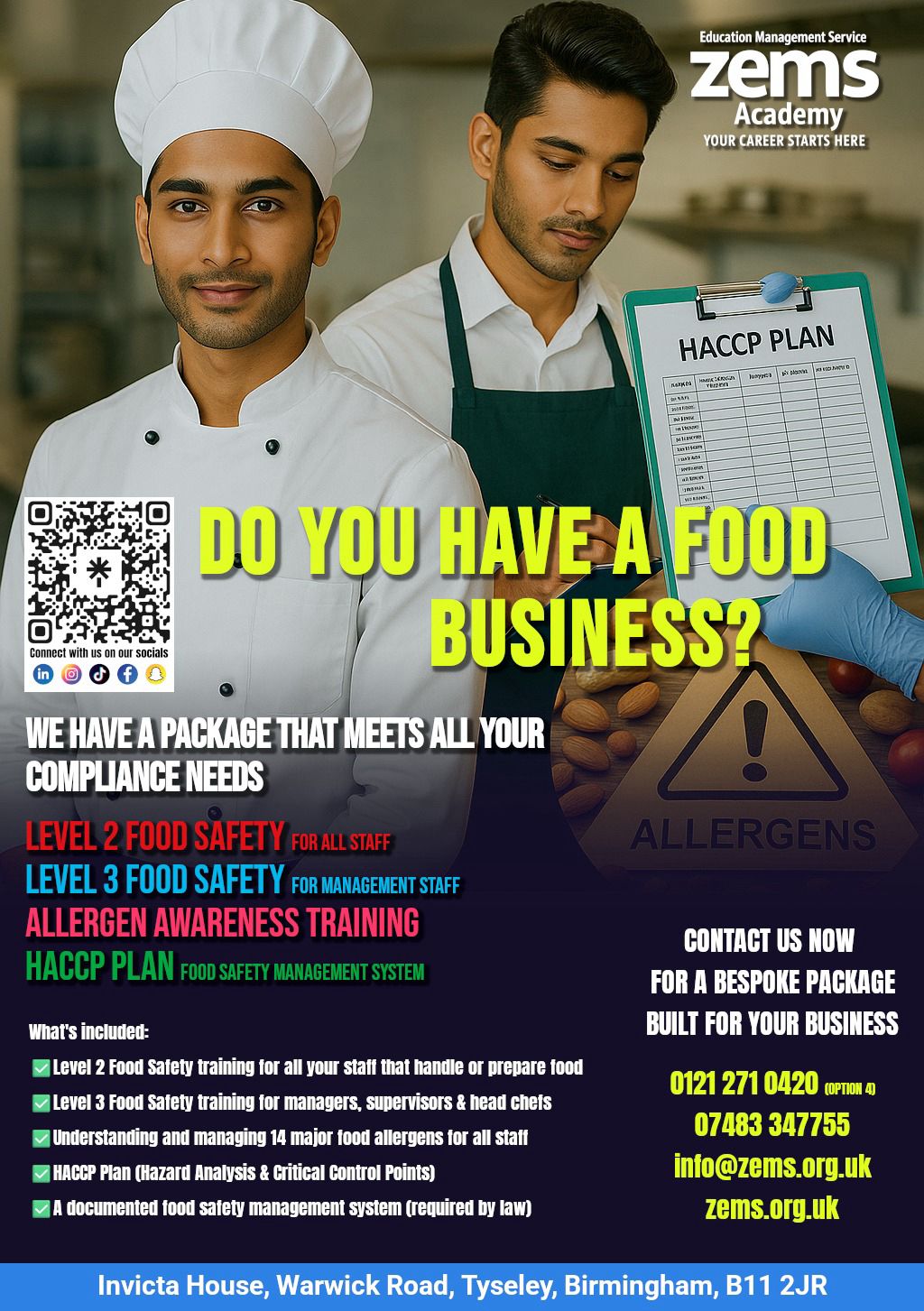
Zems Academy provides practical food safety training, hospitality training and allergen-related learning to help teams build the knowledge and confidence they need.
Contact Zems Academy to discuss food hygiene and allergen training for your hospitality business.
Read more from the Zems Academy blog.