
SIA Proposed Training Changes 2027: What Security Operatives Need to Know Now

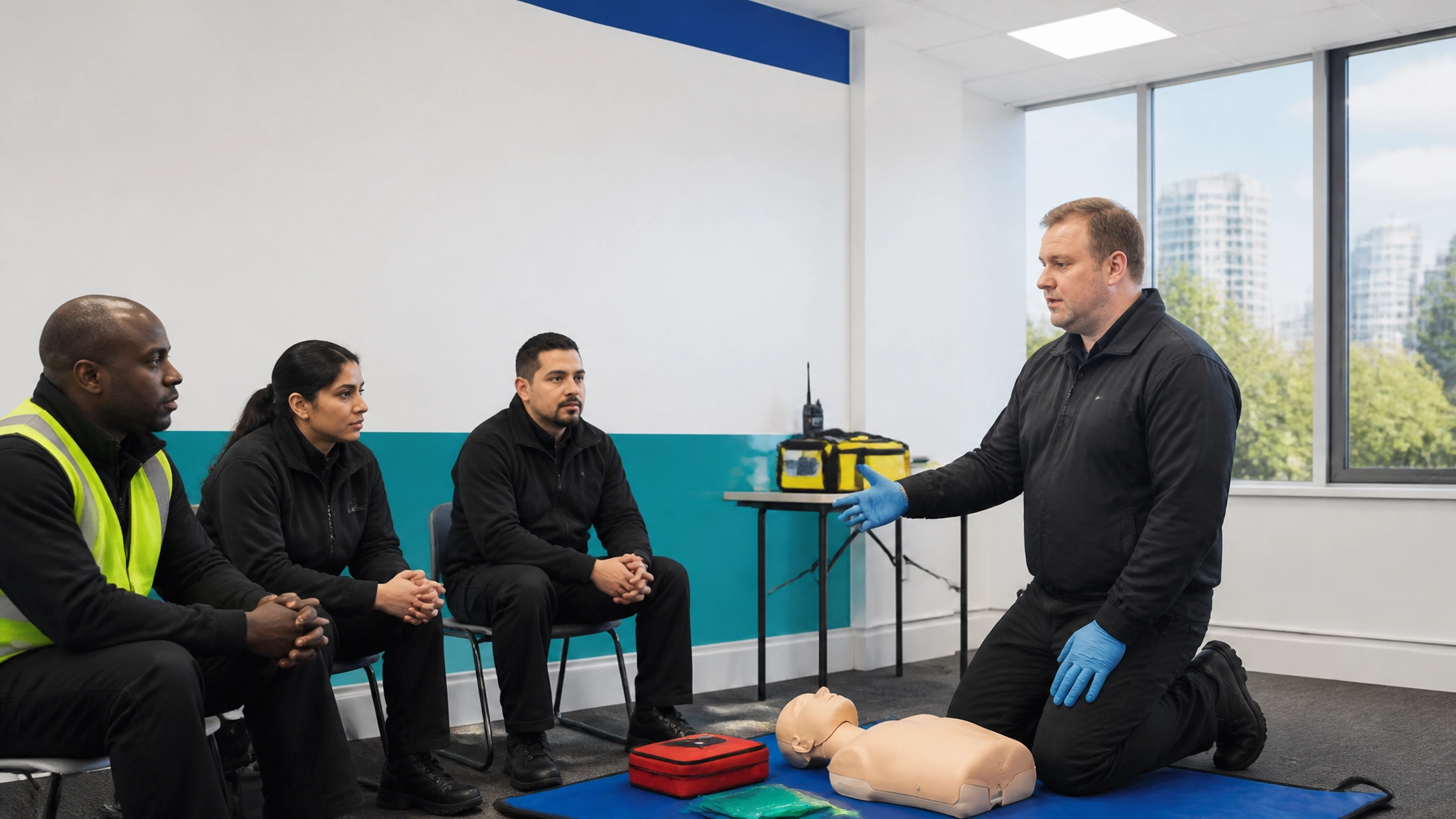
The Security Industry Authority (SIA) has launched a public consultation on proposed changes to licence-linked qualifications and training requirements.
The consultation opened on 28 August 2026 and closes at 11:59pm on 23 October 2026.
These changes are proposals, not confirmed rules.
The SIA expects to publish final qualification specifications in winter 2026. New qualifications are planned for later in 2027.
This article explains what may change, who could be affected and what you should do now.
Important: Current SIA licensing and training requirements remain in place unless the SIA officially confirms changes. Do not assume that a proposed requirement is already mandatory.
WHAT IS THE SIA CONSULTING ON?
The SIA is reviewing the knowledge, skills and assessment methods linked to front-line security licences.
The review covers roles including:
- Door supervision
- Security guarding
- Close protection
- CCTV operation
- Cash and valuables in transit
The proposed changes aim to ensure that security operatives have the practical skills needed to manage modern risks, communicate effectively and protect the public.
The SIA says some learners may need to complete more training under the proposed new specifications.
Read the official SIA consultation on GOV.UK.
THE MAIN PROPOSED CHANGES
1. IN-DATE FIRST AID COULD BECOME AN ONGOING LICENCE CONDITION
The SIA is proposing that close protection operatives, door supervisors and security guards should always hold an in-date first aid qualification.
This would be different from simply completing first aid before applying for a licence.
Under the proposal, keeping the first aid certificate valid could become an ongoing condition of holding the licence. The SIA may be able to take action if an operative allows the certificate to expire.
The proposal is based on SIA research:
- 91% of licence holders surveyed said first aid is important to their role.
- More than half said they had used first aid at work.
The SIA is also considering a new security-specific first aid qualification.
This qualification could focus more directly on incidents security operatives may face, such as injuries in crowded venues, serious bleeding, violence-related injuries and emergencies where the operative is first on scene.

2. AN ADDITIONAL INDEPENDENT ENGLISH TEST
The SIA is proposing an additional independent test of English language ability.
The aim is to give employers and the public greater confidence that licence applicants can:
- Understand instructions
- Communicate clearly
- Record information accurately
- Explain incidents
- Respond safely during emergencies
- Communicate with colleagues, police and members of the public
The SIA research found that 81% of respondents considered communication skills important.
The proposals also include more standardised assessment by awarding organisations.
This could mean greater consistency in how learners demonstrate their speaking and understanding of English during licence-linked training.
The purpose is not simply to test academic English. It is to confirm that operatives can use functional English safely and effectively in the workplace.
3. MORE REALISTIC CONFLICT-MANAGEMENT SCENARIOS
The SIA is proposing changes to conflict-management training, particularly for security guarding.
The new approach could include more realistic scenarios based on situations encountered in retail, public-facing and other security environments.
The SIA reports that 43% of licence holders surveyed are dealing with increasing levels of violence at work.
Training may therefore place greater emphasis on:
- Early recognition of conflict
- Verbal de-escalation
- Professional communication
- Managing aggression
- Maintaining personal safety
- Calling for support
- Recording incidents correctly
- Making proportionate decisions
The focus is practical preparation.
Security operatives need to know what to say, what to do and when to step away or request assistance.
4. A POSSIBLE ADVANCED PHYSICAL-INTERVENTION STANDARD
The SIA is proposing a new post-licence standard for advanced physical intervention.
This would be aimed at higher-risk deployments where additional skills may be required.
The consultation asks whether the standard should be:
- Voluntary
- Compulsory for certain roles or deployments
This does not mean that all SIA licence holders will automatically need advanced physical-intervention training.
The final position will depend on the consultation and any subsequent decision by the SIA.
Operatives should not pay for a new advanced course solely because it has been proposed. Wait for official specifications and employer guidance.
OTHER CONTENT PROPOSED FOR SECURITY TRAINING
The proposed common security industry knowledge content includes several important updates.
INCIDENT RECORDING AND CRIME-SCENE PRESERVATION
Training could include stronger guidance on:
- Writing accurate incident reports
- Recording times and key facts
- Identifying witnesses
- Protecting evidence
- Avoiding unnecessary disturbance of a crime scene
- Passing information to police
Clear records support investigations and protect both the public and the operative.
MARTYN’S LAW AWARENESS
The proposed content includes awareness of Martyn’s Law and the responsibilities connected with protecting public venues and events.
Security operatives may need a clearer understanding of:
- Terrorism-related risks
- Suspicious behaviour
- Emergency procedures
- Reporting routes
- Their role within a venue’s wider security plan
This is awareness training. It does not make every operative responsible for creating a venue’s full terrorism-protection plan.
SPIKING AWARENESS FOR MORE COURSES
Spiking awareness is currently associated with door supervision and close protection training.
The SIA is proposing to extend this content to:
- Security guarding courses
- CCTV operator courses
This recognises that security guards and CCTV operators may also identify, prevent or respond to suspected spiking incidents.
SEARCHING WHEELCHAIRS AND MOBILITY DEVICES
The proposed specifications include improved content on searching:
- Wheelchairs
- Mobility scooters
- Other mobility devices
The aim is to support safe, respectful and lawful searching.
Learners may need to understand how to apply procedures without unnecessary discrimination, while protecting people and premises.
SOCIAL MEDIA, AUDITING AND DRONES
The proposed changes also reflect modern security work.
Training content may cover:
- Social-media activity
- Auditing and monitoring activity
- The risks of online information
- Professional conduct online
- Emerging technology
- Drones and related security concerns
Security work increasingly involves digital information as well as physical premises.
A REFRESHED COUNTER-TERRORISM PACKAGE
The SIA is proposing refreshed counter-terrorism awareness content in one learning package.
The package has been developed with policing partners.
It is intended to give security operatives consistent awareness of current threats, reporting procedures and protective actions.
SIA PROPOSED CHANGES: TIMELINE

| Date | What it means |
|---|---|
| 28 August 2026 | Public consultation opened |
| 23 October 2026 | Consultation closes at 11:59pm |
| Winter 2026 | Final specifications are expected |
| Later in 2027 | New qualifications are planned |
The dates above describe the SIA’s current plan. They do not confirm that every proposal will be implemented exactly as published.
WHAT SHOULD CURRENT LEARNERS DO?
If you are already studying for an SIA qualification, continue to follow the requirements that apply to your current course.
You should:
- Confirm the qualification and licence sector you are studying.
- Ask your training provider which current requirements apply.
- Complete your existing assessments properly.
- Avoid delaying your career based on speculation.
- Read the official consultation information.
- Respond to the consultation if you have relevant experience.
If you are planning to start Door Supervisor, Security Guarding, CCTV or Close Protection training, book based on the current requirements.
A future qualification may contain additional training, but the final details are not yet confirmed.
View Zems Academy’s available training courses.
WHAT SHOULD CURRENT LICENCE HOLDERS DO?
Check your first aid certificate now.
Do not wait for the consultation outcome.
Use this checklist:
- Find your first aid certificate.
- Check the expiry date.
- Confirm that the certificate matches your current work and employer requirements.
- Ask your employer whether refresher training is due.
- Keep a digital and paper copy of your certificate.
- Record the renewal date in your calendar.
- Check official SIA updates for confirmed decisions.
- Respond to the consultation before 23 October 2026.
The proposed ongoing first aid condition is not confirmed. However, maintaining valid first aid training is a sensible professional step for security work.
Zems Academy provides first aid training and security training in Birmingham.
WHAT SHOULD EMPLOYERS DO?
Employers should review current workforce records without treating the proposals as law.
Check:
- Licence expiry dates
- First aid certificate dates
- Training records
- Incident-reporting procedures
- Conflict-management refreshers
- Counter-terrorism awareness
- Procedures for searching mobility devices
- CCTV and reporting arrangements
- Policies covering social media and drones
Employers should also consider submitting a response to the consultation.
The proposed changes may affect recruitment, induction, refresher training and deployment decisions later in 2027.
WHAT SHOULD TRAINING PROVIDERS DO?
Training providers and trainers should:
- Read the full consultation document.
- Review the draft specifications.
- Identify likely changes to course content.
- Prepare trainers for scenario-based delivery.
- Strengthen first aid and communication support.
- Monitor final specifications in winter 2026.
- Avoid advertising proposed content as mandatory.
- Give learners clear, accurate updates.
- Check awarding organisation announcements.
Zems Academy is a practical Birmingham training provider delivering SIA security and first aid training with classroom, practical and scenario-based learning.
The Academy will continue to monitor confirmed SIA information and update learners when requirements are formally published.
Contact Zems Academy in Birmingham to discuss your next training step.
RESPOND TO THE CONSULTATION
The SIA wants views from:
- Current licence holders
- Prospective security operatives
- Employers
- Training providers
- Trainers
- Security buyers
- Safety stewards
- Members of the public
You do not need to represent a company to respond.
Respond to the SIA consultation through GOV.UK.
The consultation closes on 23 October 2026.
FINAL POINT: PREPARE, BUT DO NOT PANIC
The SIA’s proposed training changes are significant.
They focus on first aid, communication, conflict management, public safety, technology and counter-terrorism awareness.
They are also still proposals.
Current learners should continue with their existing courses. Current licence holders should check their certificates and keep their skills up to date. Employers should review records and procedures. Training providers should prepare for possible changes while waiting for final specifications.
Check the official information. Check your first aid certificate. Respond before 23 October.
For practical SIA and first aid training in Birmingham, view Zems Academy’s training options or contact the Academy today.